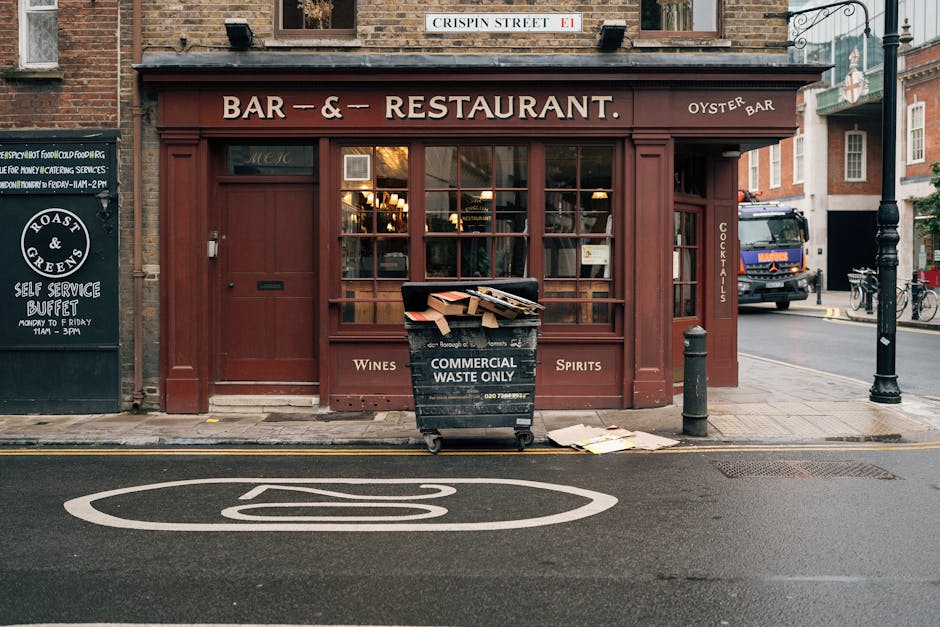
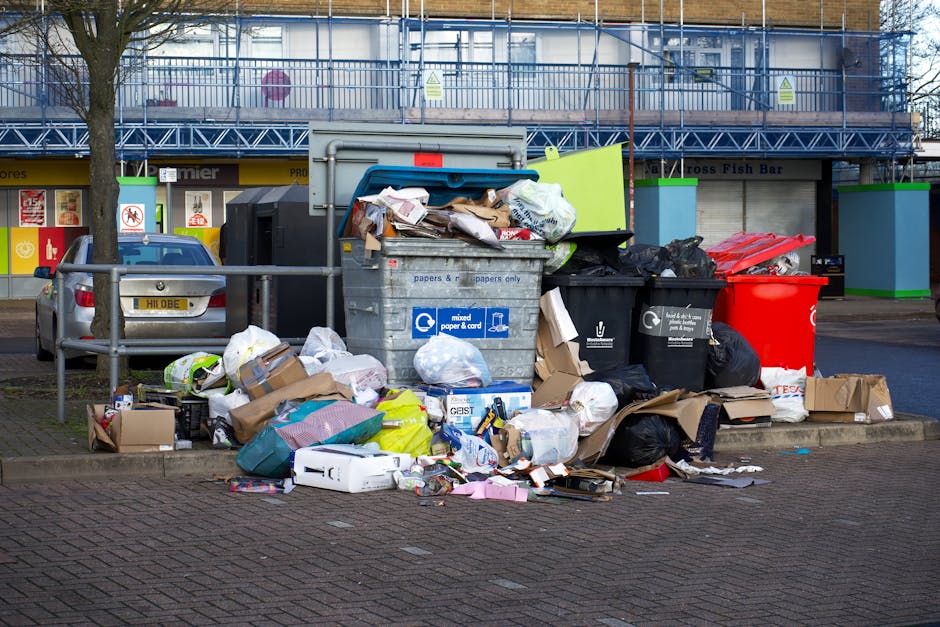
Rubbish collection in London
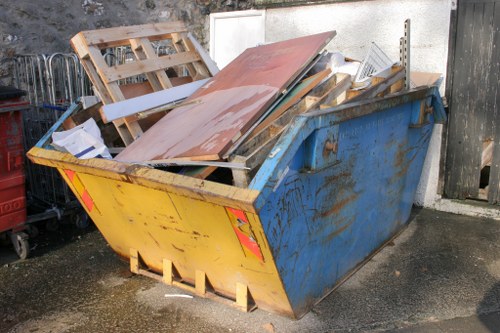
Recycled London provides rubbish collection in London for homes, landlords and businesses that need unwanted items removed in a sensible, organised way. The service is built around practical clearance work: lifting, loading, sorting and taking away everyday waste, bulky items and mixed rubbish that has built up over time. If you want a straightforward way to clear space without overcomplicating the job, our team can manage the collection and disposal side with a clear focus on recycling where material allows.
We handle a wide range of rubbish collection tasks, from single-item removals to fuller clearances that involve several rooms or storage areas. Typical work can include general household rubbish, old furniture, white goods, broken items and bagged waste, alongside mixed loads that need careful separation. Our approach is practical rather than performative: we aim to make the process manageable, keep the visit efficient, and deal with the load responsibly once it leaves the property.
For a clear breakdown of costs and the details you want us to consider, see our pricing and quotes information and then ask for a quotation when you are ready.
What our rubbish collection service covers
Rubbish collection is most useful when you have a mixture of items rather than one neatly defined waste stream. That may mean domestic clutter, packaging, broken household goods, awkward bulky pieces or general waste gathered after a clear-out. We can collect from houses, flats, storage spaces, garages and workplaces, and we plan each job around the load rather than expecting it to fit a fixed formula. Where items can be separated for recycling, we sort them accordingly.
Supported collections commonly include furniture, mattresses, fridges, white goods and other large pieces that are difficult to move without help. If you need a more focused service, you can look at furniture removal and collection, mattress removal and collection or white goods recycle. These pages sit alongside our wider rubbish work and can help you match the right service to the right kind of material.
Two useful points before you book: try to group the items you want removed, and tell us whether anything is especially heavy, fragile or awkward to reach. A short description is often enough to begin with. If the load includes a mix of recyclables and general waste, mention that too, because it can affect how the collection is planned and sorted.
Household clearances and bulkier items
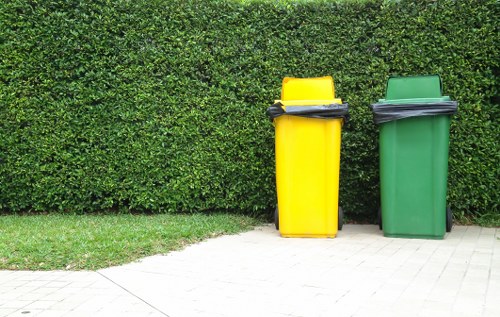
Many customers contact us when ordinary bin collections are no longer enough. That might follow a move, a renovation, a tenancy change or a long overdue clear-out. We can deal with bulky pieces, mixed household waste and items that need more than one person to carry safely. For fuller domestic work, our house clearance and home clearance pages describe related services that sit within the same overall collection approach.
In some cases, a one-off bulky item is the main issue: an old sofa, a mattress, a fridge, a broken wardrobe or a large pile of bagged waste. In other cases, the load is spread across a room, loft or garage and needs methodical removal. We can also help with large item collection and bulky waste collection when the job is shaped by size and access rather than by the number of individual items.
When planning this sort of work, it helps to think in terms of what must go and what should stay. That simple split keeps the collection focused and reduces the chance of removing items that still have use. If you are unsure whether something belongs in the load, note it separately and raise it when requesting your quote.
Commercial rubbish collection for businesses
We also provide rubbish collection for commercial premises that need regular or ad hoc clearance of unwanted material. Offices, shops, studios, shared workspaces and hospitality settings can all generate waste that is too bulky, too mixed or too awkward for normal internal handling. For those situations, commercial waste collection and commercial waste disposal are relevant service pages that support the wider rubbish removal work.
Commercial loads can include redundant office furniture, packaging, archived materials, display fixtures, broken equipment and general waste left after a refit or relocation. We can help with straightforward clearances as well as more involved jobs where access, timing and separation matter. For businesses that need a dedicated premises clear-out, office clearance and office clearances may be the closest fit to the work required.
If you are arranging a commercial collection, it is sensible to identify any items that must be handled separately, such as electrical equipment or confidential materials. A clear list of the load makes it easier to provide an accurate quotation and to decide whether a mixed collection or a more specific service is the better option.
Waste sorting, recycling and disposal choices

Good rubbish collection is not only about lifting items away. It also depends on what happens next, especially where material can be diverted from disposal through sorting and recycling. We handle loads with attention to the type of waste involved, separating reusable or recyclable items where possible and dealing with the remainder through appropriate disposal routes. This is one reason mixed loads often need more consideration than a simple single-category waste job.
Our supporting pages include waste recycling, waste disposal and recycling and sustainability. Together they reflect the practical side of choosing how rubbish should be managed once collected. Not every item can be recycled, and not every load is suitable for the same route, but responsible sorting helps make the process more coherent and less wasteful.
For customers, the main decision is often whether the material is best treated as a broad mixed collection or a more specific waste type. If you have clean, separated items, that can shape the plan. If the load is mixed and varied, a general rubbish collection may be the most efficient option. Either way, it is better to describe the contents accurately than to compress everything into one vague label.
Specialist clearances for particular situations
Some rubbish collection jobs are straightforward; others are defined by the circumstances around them. Probate clearances, hoarder clearances, garage clear-outs and loft jobs can all involve different access issues and different types of material. We have separate pages for several of these situations, including probate clearance, hoarder clearance and garage clearance, because each one brings a different mix of planning and removal work.
Loft spaces, for example, may contain a long accumulation of boxes, household items and forgotten waste that needs careful handling on stairs or through narrow openings. A garage may be cluttered with tools, old household goods, building leftovers and general rubbish in one space. In a probate setting, the work may require respectful sorting rather than simple collection. Our role is to remove the unwanted items efficiently while keeping the practical requirements of the job clear.
If the clearance is sensitive or unusually mixed, please say so when you request a quotation. That helps us understand whether the job needs more sorting time, more carrying time or a more specific disposal plan. A simple description of the main contents is often enough to start the conversation.
Bulky household items and single-load removals
Some collections are built around one troublesome item rather than a larger pile. A sofa that no longer has a place in the room, a mattress that needs replacing, a fridge that has reached the end of its life or a bed base that cannot be left for standard disposal all fit this pattern. For those needs, our service pages for sofa removal and collection, fridge disposal and bed disposal may be useful.
Single-item work is often simple in principle but awkward in practice. The challenge can be weight, access, stairs, door widths or the need to avoid damaging walls and flooring while moving the item out. We handle those practical aspects as part of the collection, which is why an accurate description of the item and its location matters more than a long explanation. If the load includes several similar items, we can fold that into the quotation too.
Useful details to mention include the item type, the floor level, whether there are steps, and whether the item is already outside or still inside the property. These details do not need to be overcomplicated; they simply help us understand the job properly before we quote.
About London

London is the capital and largest city of the United Kingdom, spreading across a wide area on the River Thames and shaped by centuries of growth, movement and rebuilding. Its historic core developed from Roman Londinium, and the city has since expanded into a complex mosaic of boroughs, neighbourhoods and central districts. The Thames remains a defining feature, with bridges, embankments, wharves and riverside paths linking the old and new parts of the city in a continuous urban landscape. Major landmarks such as the Tower of London, Westminster Abbey, St Paul’s Cathedral and the Palace of Westminster sit within this dense pattern of streets and institutions. At the same time, London includes a great variety of residential districts, parks, markets and civic spaces, from the open views of Hampstead Heath and Richmond Park to the formal routes of the West End and the historic squares of Bloomsbury. The city’s transport network is equally distinctive, with the Underground, Overground, buses and mainline rail services connecting areas that have their own local character and history. Cultural life is broad and layered, encompassing theatres, galleries, museums, libraries and music venues alongside everyday markets, independent shops and long-established places of worship. Because so much of the city has been repeatedly adapted, London often combines Georgian terraces, Victorian streets, post-war estates and modern developments within the same district, making its built environment unusually varied. That combination of scale, history and density gives the city a strong sense of continuity while still changing from one neighbourhood to the next.
For heavier or repetitive household waste, the process often comes down to sensible planning rather than dramatic intervention. Try to place smaller items together, make sure access routes are clear if possible, and keep anything you want to retain separate from the material to be removed. If a collection includes items with special handling needs, mention that early so the quote reflects the real work involved.
Pricing factors and quotation details
Rubbish collection prices usually depend on the amount of material, the type of waste, the access conditions and whether the load includes items that need separate handling. A job on a ground floor with clear access is different from one involving stairs, distance carrying or several bulky pieces. That is why a quotation works best when it is based on a proper description of the collection rather than on a guess from a single phrase. Our pricing and quotes page is the right place to begin if you want a clearer idea of how the service is priced.
Some collections are straightforward enough to describe in a sentence or two. Others need a list, especially where the load is mixed, the property is crowded or the items vary in size and weight. If you have photographs, they can help, but they are not the only useful detail. The most helpful information is usually a concise account of what is there, where it is, and whether anything unusual needs to be considered during removal.
When you are comparing options, think about the whole job rather than the waste alone. Ease of access, item type and sorting requirements all affect the work involved. A clear quotation should reflect that mix in a simple, readable way.
Domestic and property-related clearances

Rubbish collection often overlaps with wider property work, especially when a home is being prepared for sale, let, refurbishment or handover. We can help with clear-outs that involve mixed domestic rubbish, unwanted furniture, leftover contents and the sort of accumulation that makes a room or storage area hard to use. For more structured property work, the related pages property clearance, flat clearance and waste clearance provide a useful route through the different services available.
Where the work is linked to a move or a renovation, customers often want a service that is tidy, direct and dependable in its scope. That does not mean the same approach suits every property. Flats may have stair-only access and limited parking; houses may have lofts, sheds and garden-side waste to deal with as well. We keep the service adaptable to the load and the location of the items rather than forcing them into one narrow category.
If you are ready to move forward, contact us with a short description of the waste and ask for a quotation. If you are still deciding, you can first review the service pages that best match your load, then come back when you are ready to arrange collection.