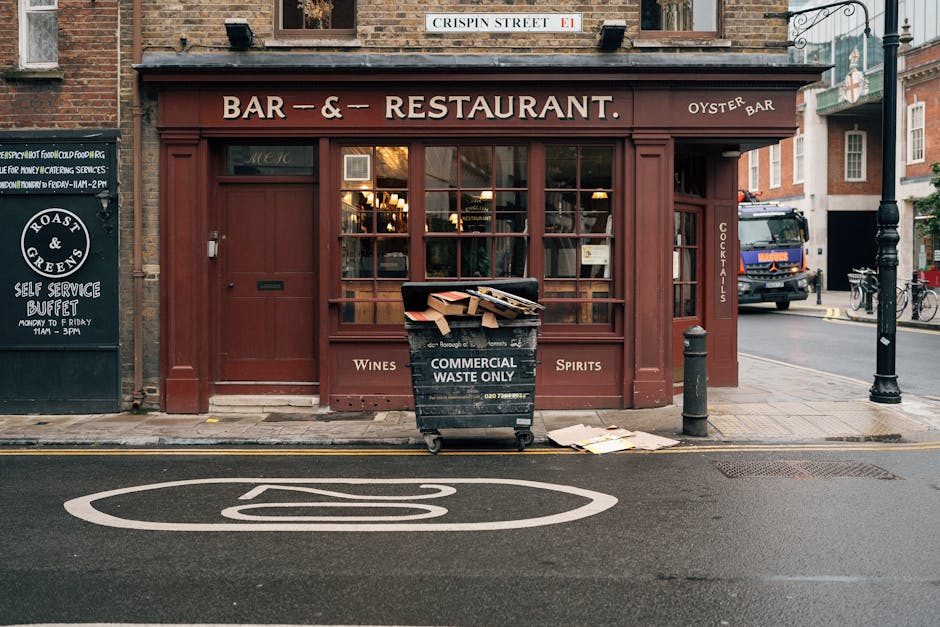
Guide to bulky waste pickup near King's Cross N1, London
If you are trying to clear a sofa, mattress, broken wardrobe, office chair, or a stack of awkward items from a flat near King's Cross, you probably want one thing: a bulky waste pickup that is quick, tidy, and doesn't turn into a half-day headache. That's exactly what this guide is for. It explains how bulky waste collection works near King's Cross N1, what to check before booking, how to avoid common mistakes, and when a professional removal service makes more sense than a council-style collection. Simple enough on paper. In real life, though, there are often stairs, tight hallways, loading restrictions, and items that look lighter until you try to move them. We'll get into all of that.
Along the way, you'll also find practical advice on recycling, compliance, and how to compare options without getting lost in jargon. If you need a local service overview, it can also help to look at the broader rubbish and recycling services available across London and nearby areas.
Why bulky waste pickup near King's Cross N1 matters
King's Cross is busy, dense, and constantly moving. That's part of its appeal, but it also makes bulky waste removal more complicated than in a suburban street with a driveway and generous kerb space. A mattress left in a hallway, a wardrobe leaning by the front door, or an old desk waiting in a communal area can quickly become a nuisance for neighbours, landlords, and building managers. In some buildings, it can even create access issues or fire safety concerns. Nobody wants that awkward message from the property manager at 8:15 in the morning.
Bulky waste pickup matters here because space is limited and timing matters. The right service can reduce clutter, avoid damage to walls and lifts, and keep the removal process discreet. It also helps keep reusable or recyclable items out of landfill where possible. That last point is easy to overlook, but truth be told, it's often where a good collection service adds the most value.
There's also a financial angle. A fast, efficient clearance can save you from paying for extra storage, missing a move-out deadline, or having to hire a van and do the lifting yourself. If you are comparing providers, a dedicated pricing and quotes page is usually the best place to start because it helps you understand what factors affect the final cost.
Practical takeaway: in an area like King's Cross N1, the best bulky waste solution is rarely just "the cheapest". It's the one that fits your access, timeline, item type, and building rules without drama.
How bulky waste pickup near King's Cross N1, London works
At a basic level, bulky waste pickup means collecting large items that are too heavy, awkward, or large for normal household waste collections. That includes things like beds, cupboards, sofas, white goods, office furniture, and sometimes mixed loads from home renovations or end-of-tenancy clear-outs. The exact service depends on the provider, but the process is usually similar.
First, you describe the items. Good providers will ask for photos, quantity, access details, and whether the items contain anything hazardous or especially heavy. Then they'll give you a quote or estimate. Once booked, the team arrives with the right vehicle and lifting gear, removes the items safely, and sorts them for reuse, recycling, or disposal. In London, access is often the big variable. A second-floor walk-up on a narrow street is a very different job from a ground-floor flat with a service yard.
For many customers, the hardest part is not the removal itself but knowing how to prepare. Do you need to dismantle the wardrobe? Should cushions stay attached to the sofa? What about screws, drawers, or bolts? These details matter because they affect loading time and safety. If you are unsure, ask before the booking. It saves everyone time, which, let's face it, is usually the real currency in central London.
Some collections are scheduled quickly, while others need a little coordination if there are access codes, concierge rules, or parking restrictions. If you also need reassurance around handling and transport, services that publish clear policies on insurance and safety tend to be easier to trust because they show they are thinking about risk, not just collection speed.
Key benefits and practical advantages
A well-run bulky waste pickup is not just a clean-up job. It solves several problems at once. The obvious benefit is getting large items out of the way quickly. But the less obvious benefits are often the ones people appreciate most afterwards.
- Saves physical effort: carrying a broken sofa down stairs is not a fun afternoon project, especially if your stairwell does that lovely London thing of being just slightly too narrow.
- Reduces disruption: a professional team can work around neighbours, loading windows, and building rules more smoothly.
- Improves recycling outcomes: separate items can often be diverted into different material streams.
- Helps with deadlines: useful for end-of-tenancy clears, office moves, and refurbishments.
- Minimises damage: proper lifting and route planning can prevent scuffed walls, dented doors, and scratched flooring.
- Creates a clearer space fast: sometimes the emotional relief is real. A room feels bigger the minute the big stuff goes.
There is also a practical hygiene angle. Old mattresses, damaged upholstery, and damp furniture can attract dust and unpleasant smells, especially if they have been sitting in a storage cupboard or basement. Removing them promptly helps keep the home healthier and more usable. For households trying to pair clearance with better environmental choices, recycling and sustainability guidance is a useful companion resource.
Who this is for and when it makes sense
Bulky waste pickup near King's Cross N1 is useful for a wide mix of people. It is not just for people moving house, though that is a very common reason. In practice, the service fits anyone who has large items they cannot easily move or dispose of through regular household collections.
Typical situations
- Tenants at the end of a tenancy: especially when the landlord expects the property cleared before handover.
- Homeowners decluttering: old furniture, broken appliances, and "I'll deal with that later" items.
- Landlords and letting agents: post-eviction clearances, leftover furniture, or abandoned items.
- Offices and studios: desks, chairs, cabinets, and packaging waste after a fit-out or refit.
- People without a car or van: which, in central London, is a lot of us to be fair.
It also makes sense when the item is too big for you to manage safely alone. A sofa may look manageable until you meet the corner turn at the bottom of the stairs. That is often the moment people realise they need help. If you are near the borough boundary or comparing coverage beyond central London, local area pages such as Tower Hamlets, Waltham Forest, and Havering can be useful for understanding broader service reach.
In short: if the item is heavy, awkward, time-sensitive, or likely to cause hassle in a shared building, this is the kind of service worth booking.
Step-by-step guidance
If you want a smooth collection, a little prep goes a long way. Here is the clearest way to approach it.
- List the items clearly. Count how many items you have and note the type: sofa, mattress, wardrobe, mixed furniture, appliance, or builders' waste.
- Take a few photos. A couple of angles is enough. Include anything unusual, like water damage, missing parts, or extremely heavy pieces.
- Check access. Think about stairs, lifts, parking, loading bays, and whether the item needs to pass through narrow hallways or communal areas.
- Separate hazardous items. Paints, chemicals, gas cylinders, and similar materials often need special handling. Do not just tuck them in with ordinary rubbish and hope for the best.
- Ask about dismantling. If a bed frame or wardrobe can be broken down safely, it may reduce collection time and cost.
- Get a quote based on the full job. Not just the item list. Access details matter, and often more than people expect.
- Confirm timing and parking arrangements. In central London, that can be the difference between a calm collection and a stressful one.
- Prepare the space. Move small items out of the way, clear the route, and keep children or pets away during the lift.
Here's the part people sometimes skip: if you think an item may be recyclable, mention it. A good provider can often separate materials rather than sending everything down one disposal route. That's better for the environment and usually just better practice, full stop.
If you are booking online, make sure payment and booking details are protected through a secure checkout. A service that explains its payment and security arrangements clearly is usually easier to deal with all round.
Expert tips for better results
The difference between a decent collection and a genuinely smooth one is usually in the details. A few small choices can save a surprising amount of hassle.
- Measure awkward items before booking. A sofa that fits in the room may still snag on a stair bend.
- Photograph access points. Lifts, entrances, and rear lanes can matter as much as the waste itself.
- Be honest about quantity. "A couple of bits" can turn into a vanful very quickly.
- Tell the provider about parking limits. A suspension bay or controlled parking zone changes the planning.
- Bundle similar items together. It makes loading and sorting faster.
- Keep reusable items separate where possible. A chair with life left in it may be handled differently from a broken one.
One useful trick, especially in shared buildings, is to stage items in the room closest to the exit the day before collection. That avoids the noisy shuffle of moving things around in the morning when neighbours are leaving for work and everyone's still half asleep. Small thing, big difference.
Another tip: if you are dealing with a building manager or concierge, send them the collection time in advance. A quick heads-up can smooth over lift access or loading concerns before they become a delay. Seems obvious, but people forget. Often.
Common mistakes to avoid
Most bulky waste problems are preventable. The usual issues are not complicated, just annoying. Here are the ones worth avoiding.
- Leaving booking until the last minute: especially before a move-out deadline or refurbishment handover.
- Underestimating the item size: a "standard" wardrobe may be far less standard once it reaches the hallway.
- Ignoring access restrictions: parking, lift bookings, concierge rules, and time windows all matter.
- Mixing prohibited items with ordinary waste: this creates compliance and safety issues.
- Choosing only on headline price: cheap can become expensive if it does not include the real access conditions.
- Not checking whether recycling is included: some services handle sorting better than others.
There is also the "I'll just leave it near the bins" approach. Not recommended. In a place like King's Cross, that can create complaints fast, and it can make the collection more difficult for everyone else in the building. A tidy arrangement is simply easier to manage.
If you want to understand how reputable providers structure service quality and complaint handling, their complaints procedure can give you a useful sense of whether they take accountability seriously.
Tools, resources and recommendations
You do not need special equipment to book bulky waste pickup, but a few tools and resources help you make better decisions. The right information makes the whole process feel less guessy. Less guessy is good.
Useful things to have before you request a quote
- Photos of every item
- Approximate dimensions
- Floor level and lift access details
- Any parking or loading restrictions
- A note on whether items are reusable, recyclable, or damaged
- Any building rules about collection times
Helpful service pages and support information
If you are comparing providers, it helps to review their policies as well as their prices. Pages covering health and safety policy, insurance and safety, and recycling and sustainability can tell you a lot about how the company works behind the scenes.
For people who want local coverage beyond central London, nearby area pages such as Potters Bar, Watford, and St Albans show the wider service footprint and may help if your project stretches beyond one postcode.
If you need to compare collection costs or arrange a custom job, the most direct next step is usually to request a tailored estimate via pricing and quotes. That is typically where you can spot the difference between a general estimate and a quote based on your actual access conditions.
Law, compliance, standards, or best practice
For bulky waste pickup, the main compliance concerns are straightforward: waste must be handled safely, transported responsibly, and passed to legitimate disposal or recycling routes. You do not need to become an expert in waste law to book a collection, but it does help to know the broad principles. The provider should be able to explain what they take, what they do not take, and how they manage any special items.
In practical terms, best practice usually means:
- safe lifting and loading procedures
- clear separation of reusable, recyclable, and non-recyclable waste
- transparent handling of restricted or hazardous items
- proper insurance and operational safeguards
- respect for building access rules and local restrictions
If a provider is vague about what happens after collection, that is a red flag. You do not need a lecture, but you do need clear answers. A good operator should be able to explain the practical route without fuss. Not every detail, perhaps, but enough to reassure you.
There are also wider ethical and operational standards that matter. Responsible businesses often publish statements covering accessibility, modern slavery, and security because they want customers to know how they operate. These pages are not just formalities; they signal that the business has thought through the boring-but-important parts. For example, if you want to understand site access or how the company supports different users, the accessibility statement can be a helpful signpost, while the modern slavery statement reflects broader supply-chain responsibility.
Options, methods, or comparison table
There are several ways to deal with bulky waste near King's Cross N1. Some are cheaper upfront, some are easier, and some are better when time is tight. The right choice depends on your item type, your building access, and how hands-on you want to be.
| Option | Best for | Pros | Things to watch |
|---|---|---|---|
| Council-style bulky waste collection | Planned, low-urgency household items | Can be a straightforward option for eligible items | May involve waiting times, item limits, and stricter booking rules |
| Private bulky waste pickup | Fast clearances, mixed items, difficult access | Flexible, quicker, often more convenient for central London | Price varies with load size, access, and urgency |
| Self-haul to a disposal site | People with a van, time, and lifting help | Can be cost-effective for some jobs | Parking, handling, and time can make it more difficult than expected |
| Reuse or donation route | Items in good condition | Best environmental outcome if the item can be used again | Not every item is suitable; transport and acceptance criteria still matter |
For many King's Cross households and businesses, private pickup is the most practical choice because it handles access issues and time pressure better. That said, if your item is reusable and you have time, a reuse route can be worth considering first. A chair with a bit of life left in it may have another home before it becomes waste. That feels better, honestly.
Case study or real-world example
A typical scenario near King's Cross goes something like this. A tenant in a third-floor flat needs a bulky waste pickup before checkout day. The items are a small sofa, a bed frame, a mattress, and a dismantled desk. The property has a narrow stairwell, shared entry, and a time window for loading in the morning. The tenant initially thinks, "It's only a few things." Then the measurements start, the mattress looks bigger than it did in the bedroom, and the bed frame has more screws than anyone wants to count.
Once the access details were checked, the collection plan became simple: the provider asked for photos, confirmed parking access, and suggested the bed frame be broken down ahead of time. The tenant staged the items near the front room the night before, cleared the route, and kept the hallway free. On the day, the collection was quicker, quieter, and less stressful than trying to manage it all alone.
The key lesson? Planning beats improvisation. Every time. Especially in a building where one blocked corridor can become everybody's problem for the afternoon.
This kind of job is also where trust matters. If you want a service aligned with practical safety and transparency, it helps to use providers with clear policies and a recognisable local service structure, including area coverage such as Tower Hamlets and Waltham Forest where nearby logistics can overlap.
Practical checklist
Use this checklist before your pickup day. It keeps things simple and avoids those last-minute surprises that always seem to happen five minutes before the van arrives.
- Have I listed every bulky item?
- Have I taken clear photos from more than one angle?
- Do I know whether the items need dismantling?
- Have I checked stairs, lift access, and parking restrictions?
- Have I separated hazardous or restricted materials?
- Have I confirmed the collection time and any building rules?
- Have I moved small objects out of the route?
- Have I told the concierge, landlord, or building manager if needed?
- Do I know whether the provider prioritises recycling?
- Have I saved the booking confirmation and contact details?
Quick reminder: if you are unsure about an item, ask before collection day. It is much easier to clarify now than to solve it on the pavement with the clock ticking.
Conclusion
Bulky waste pickup near King's Cross N1 does not need to be stressful. With the right preparation, a clear quote, and a provider that understands central London access, the process can be fast, tidy, and surprisingly straightforward. The big win is not just getting rid of items. It is getting rid of them safely, responsibly, and without disrupting the rest of your day.
If you are comparing providers, focus on more than the headline price. Look at access support, recycling approach, safety standards, and how clearly the company explains its process. That combination usually tells you more than any sales pitch ever will.
Get a free quote today and see how much you can save.
And if you are still undecided, that's fine. A little extra checking now is often the difference between a messy clear-out and a calm one. The calm one tends to feel better, every time.
Frequently Asked Questions
What counts as bulky waste near King's Cross N1?
Bulky waste usually means large household or office items that are too heavy or awkward for normal bin collections. Common examples include sofas, mattresses, wardrobes, desks, chairs, and some appliances.
How quickly can bulky waste be collected in King's Cross?
Timing depends on the provider, item type, and access details. In central London, faster collections are often possible when the booking is clear and there are no parking or building-access complications.
Do I need to dismantle furniture before pickup?
Not always, but dismantling can make the job easier and sometimes cheaper. If an item can be safely broken down without damage, it may help with narrow stairwells or tight hallways.
Can bulky waste include a mattress or sofa?
Yes, both are very common bulky waste items. Just make sure to mention the size and condition when requesting a quote, because access and load volume can affect the collection.
Is bulky waste pickup better than taking items to a tip myself?
That depends on your time, vehicle access, and lifting ability. Self-haul can work for some people, but in central London the convenience and reduced handling of a pickup service often make it the better option.
What should I do with hazardous items?
Hazardous items such as chemicals, paints, gas cylinders, and certain electricals may need special handling. Always check in advance rather than adding them to a general bulky waste load.
How do I get an accurate bulky waste quote?
Provide a clear item list, photos, access details, floor level, parking restrictions, and any special instructions. The more accurate the information, the more reliable the quote will be.
Will my items be recycled?
Often, yes, where the condition and material allow it. Reputable providers sort items for reuse, recycling, or disposal as appropriate. If recycling matters to you, ask how the load will be handled.
What if I live in a flat with no lift?
That is common in London and not a deal-breaker. Just mention the stairs and floor level when booking so the provider can plan the right team and equipment.
Are there rules for leaving items outside?
Yes, and they vary by building and local authority. Leaving items in a shared hallway or beside bins without agreement can cause problems, so it is better to arrange the collection properly.
Why do some providers ask for photos?
Photos help assess size, condition, access difficulty, and whether items can be moved safely. They also reduce surprises on the day, which is good for everyone involved.
What makes a bulky waste service trustworthy?
Look for clear pricing, straightforward communication, proper safety information, transparent policies, and sensible questions during booking. A trustworthy provider usually makes the process feel calm rather than rushed.